
The hair elasticity test
Elasticity is how far your hair stretches and bounces back. It is the other home test worth knowing, and it tells you whether you need protein or moisture.
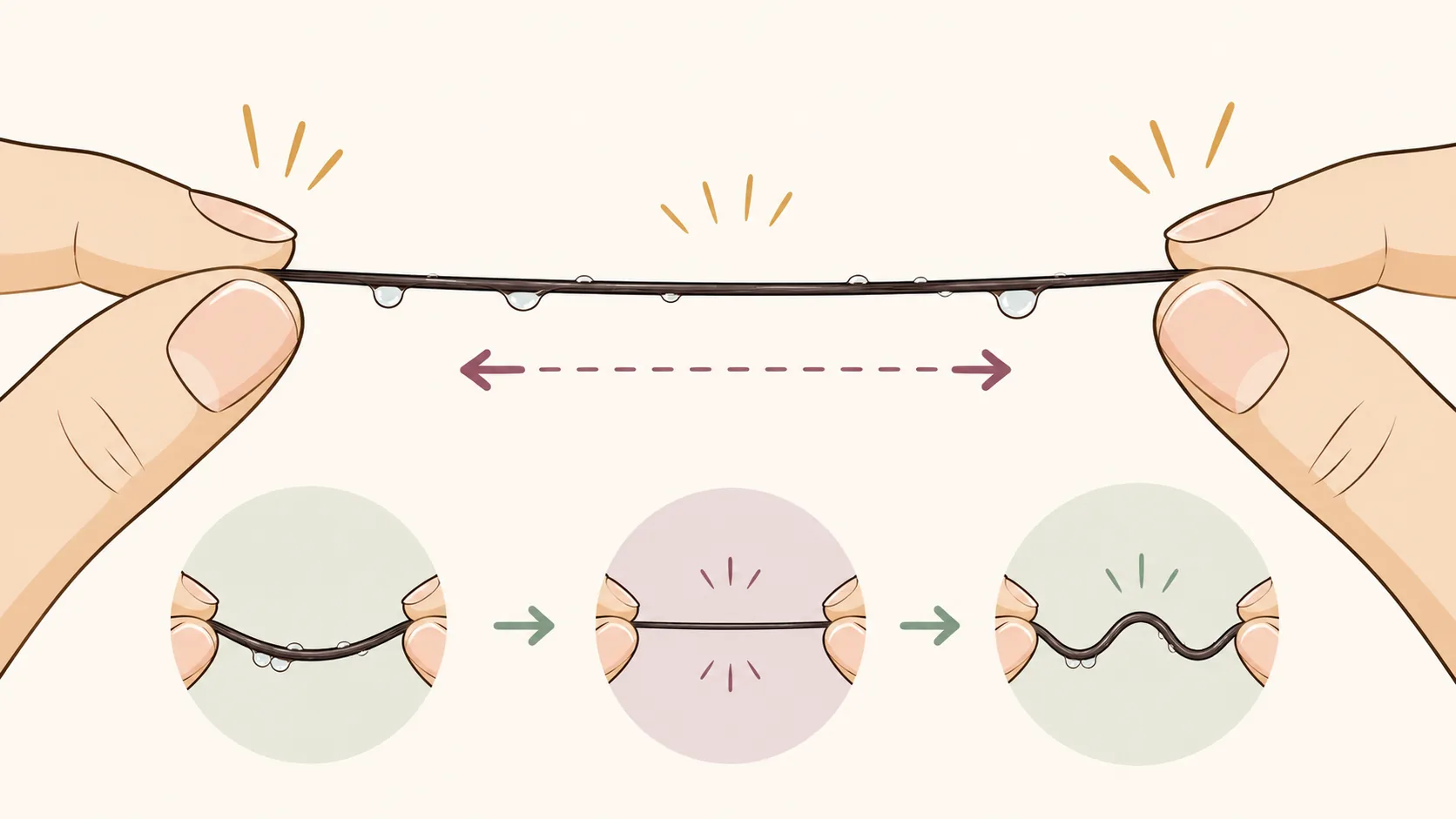
What hair elasticity is
Elasticity is the ability of a hair strand to stretch and then return to its original length without breaking. When you tug a healthy strand, it gives a little, springs back, and stays whole. That small, springy give is a sign that the inside of the hair is in good shape, with the protein structure and the moisture working together the way they should.
Think of a single hair like a tiny rope with two jobs to do at once. The protein gives it structure and strength so it does not snap. The moisture keeps it soft and flexible so it can bend and stretch instead of cracking. Elasticity is what you feel when both of those are in balance. It is one of the clearest, most useful things you can check at home, because it tells you how your hair is doing on the inside, not just how it looks on the surface.
Elasticity vs porosity
These two get mixed up all the time, so it is worth being clear. Porosity is about the outside of the hair: how easily the cuticle (the outer layer of overlapping scales) lets water and product in, and how well it holds onto moisture once it is there. Elasticity is about the inside of the hair: its strength and the protein-moisture balance within the strand.
They are related. High porosity hair, where the cuticle is raised or damaged, often loses moisture quickly and tends to be less elastic. But they are still two different measurements, and one does not replace the other. Porosity tells you how to get moisture and product into your hair and make it stay. Elasticity tells you whether the hair has the internal strength to handle styling without breaking. Together they give you a much fuller picture than either one alone.
- Porosity: how the cuticle absorbs and holds moisture. Guides which products and oils suit your hair and how to layer them.
- Elasticity: strength and the protein-moisture balance inside the strand. Guides whether to lean toward protein or moisture.
- Together: porosity sets your baseline routine, and elasticity tells you which way to adjust it.
If you have not found your porosity yet, that is the place to start. The free porosity quiz and the water (float) test will both get you there, and your elasticity result will make a lot more sense once you have it.
How to do the test
The wet-stretch test takes less than a minute and needs nothing but your own hair. Wet hair is more elastic than dry hair, so testing it wet gives you the clearest read.
- Take a single strand of clean, wet hair. Conditioned is fine, and a shed strand from your brush or the shower works well so you are not pulling from your scalp.
- Hold the strand gently at both ends, one end between the fingertips of each hand.
- Slowly and gently stretch it. You are looking for how far it gives and whether it returns, not trying to test it to destruction.
- Ease off and watch what it does: does it spring back, stay stretched, or break.
Do it a couple of times with different strands, since one hair can fool you. If your ends are colored or heat-styled, test a strand from your ends as well as one closer to your roots. They can behave differently, and your ends usually need more care.
How to read your result
Here is what each result usually means. Read it as a gentle signal, not a diagnosis. Hair is forgiving, and most of these are easy to nudge back into balance.
| What the strand does | What it usually means | Where to lean |
|---|---|---|
| Stretches a little and springs back without breaking | Healthy elasticity and a good protein-moisture balance | Keep your routine as is |
| Snaps almost immediately with little stretch | Low elasticity, often dry and lacking flexibility | Moisture first, and possibly some protein |
| Stretches a long way, feels gummy, does not bounce back or breaks after over-stretching | Often over-moisturized and short on protein | Protein to rebuild structure |
If your strand snaps right away, the most common cause is that it is thirsty and stiff. Start with moisture, and add a light protein step if it still feels weak. If your strand stretches like chewing gum and stays limp, that gummy, mushy feel is the classic sign of too much moisture and not enough protein. A protein or bond treatment is the usual fix there.
Protein vs moisture balance
Protein and moisture sit on a seesaw. When one side gets too heavy, your hair tells you, and elasticity is how you hear it.
- Too much protein: hair feels stiff, straw-like, rough, and snappy. It can look dull and feel brittle. The fix is moisture, and easing off protein products for a while.
- Too much moisture: hair feels limp, mushy, and over-elastic. It stretches too far and will not hold a style. The fix is protein to bring structure back.
The goal is not maximum protein or maximum moisture. It is balance. Your porosity and your elasticity together tell you which way to lean, and our guide to balancing protein and moisture walks through how to act on that read. As a general rule, high porosity hair tends to lose moisture fast and often welcomes more protein to help hold structure, while low porosity hair tends to be more protein-sensitive and usually does better with moisture in the lead and protein kept light and occasional.
Go slowly when you adjust. Add one protein step or one extra moisture step, give it a wash or two, then retest. Small, patient changes beat big swings, and the wet-stretch test makes it easy to check whether you moved in the right direction.
Heads up: the links below are affiliate links. If you buy through them we may earn a small commission at no extra cost to you, and we pick by fit, not by commission.
What is the difference between porosity and elasticity?
Porosity is how well the cuticle absorbs and holds moisture. Elasticity is how far a strand stretches and bounces back, which reflects its protein-moisture balance and strength. They are related but measure different things.
What does low hair elasticity mean?
A strand that snaps almost immediately with little stretch has low elasticity. It usually needs more moisture, and sometimes protein, to rebuild strength and flexibility.
How do I know if I need protein or moisture?
Hair that is stiff, straw-like, and snappy usually has too much protein and needs moisture. Hair that is limp, mushy, and over-stretchy usually needs protein. Your porosity result helps point the way.